


by John Sutherland, Founder of Adaptive Bodywork Structural Integration
Understanding What Really Happens When Emotion Appears in Bodywork
I recently watched a webinar by Carla Stecco titled “The Role of Fasciae in Body Perception,” presented through the Fascia Research Society.
I approached it from two perspectives.
First, as a clinician who wants better explanations for what we feel under our hands and what our clients report during and after sessions.
Second, as an educator who knows how quickly a few imprecise phrases can turn into full-blown mythology once they enter the therapy ecosystem and social media.
There was much to appreciate in the presentation. The reminder that fascia is not inert packaging is important. Connective tissue is richly innervated, mechanically diverse, and deeply involved in how we experience movement, load, and orientation in space. Whatever technique camp you sit in, it is increasingly hard to deny that fascia plays a meaningful role in how the body communicates with the nervous system.
If we are trying to help therapists understand that what they feel as “tissue sensation” is really the nervous system interpreting sensory input, this kind of material is valuable—provided we are careful with our language.
And that caveat matters more than ever.
Where Language Starts to Matter

One place where the webinar could benefit from more precision is in its discussion of how the brain represents the body. The term body image was used in a way that more accurately describes body schema.
This distinction is not academic nitpicking—it shapes how people think about what they are doing.
-
Body schema is the mostly non-conscious, constantly updating map that helps us coordinate movement, posture, and orientation.
-
Body image is the conscious, emotional, and cognitive experience of the body—how we think and feel about it.
They overlap, but they are not interchangeable. When we blur these concepts, we invite therapists to make larger claims than the evidence supports.
But the more significant issue—the one many viewers likely noticed—was the familiar suggestion that fascia holds the memory of stress.
I do not believe this was presented in the sensationalized “trauma is stored in tissue” sense that dominates social media. But wording matters. When phrases like subconsciously stored are paired with fascia, many clinicians and clients hear exactly that message anyway.
And that is where we need to slow down.
Separating What Often Gets Blended Together
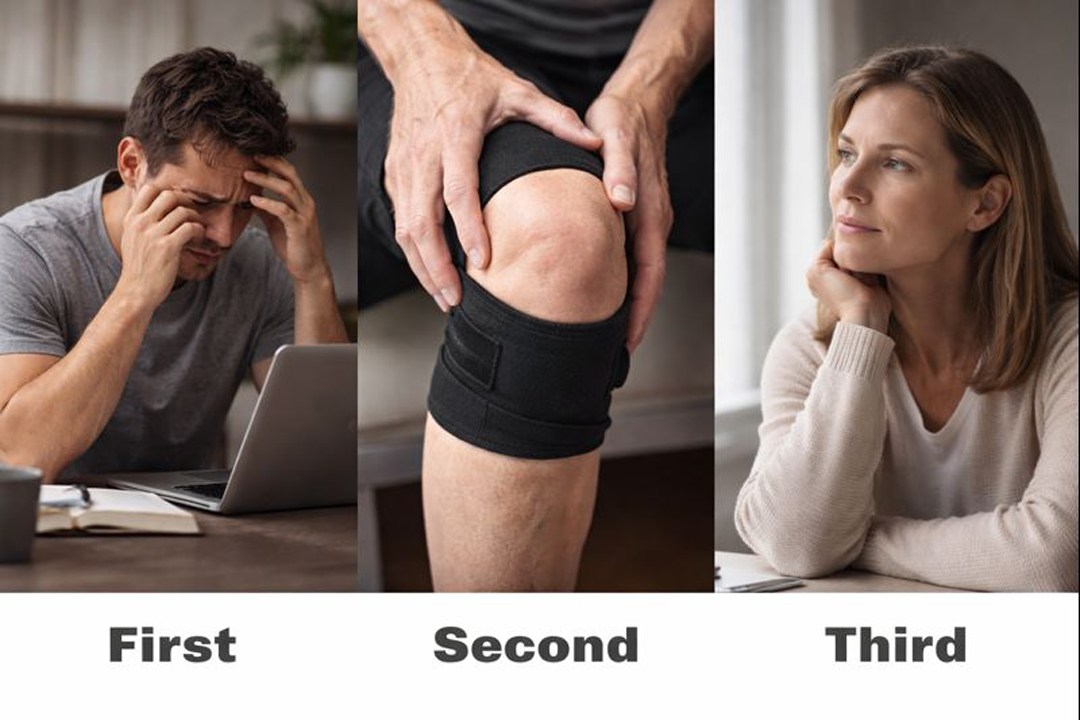
If we want to be responsible—clinically, scientifically, and ethically—we need to separate at least three things that are often collapsed into one dramatic sentence.
First: Stress changes physiology.
Autonomic state affects breathing, vascular tone, muscle tone, attention, and threat appraisal.
Second: Tissue adapts over time.
If loading patterns change, movement options narrow, activity drops, or inflammation and metabolic conditions persist, connective tissue remodels. That is biology, not metaphor.
Third: Memory, meaning, prediction, and emotion are nervous system functions.
They are experienced through the body, but organized and updated by the nervous system—not stored in collagen like files in a cabinet.
The brain builds and updates internal models through synaptic change. It uses input from everywhere—skin, muscle, fascia, joints, and viscera—to keep those models running. But the story itself is not located in the tissue.
Why People Feel Emotion During Bodywork

This is the point where many clients—and many therapists—get confused.
During an Adaptive Bodywork session, a client may experience shaking, crying, deep sighing, heat, or an emotional wave. Sometimes it happens on the table. Sometimes it happens hours or days later.
They often say:
“I don’t know why that happened, but I feel better.”
From the inside, it is completely reasonable to conclude:
“That emotion must have been stuck in my tissue.”
But that is not what is actually happening.
Here is the more accurate mechanism.
What’s Really Happening: A State Change, Not a Release

Fascia, muscles, joints, and organs constantly send sensory information to the nervous system. Over time—especially under stress, injury, uncertainty, or repeated strain—the nervous system may decide that certain areas need to stay guarded.
This guarding is not emotional.
It is protective.
It shows up as:
-
increased tone
-
reduced movement options
-
altered breathing
-
background vigilance
These are not memories.
They are ongoing protective strategies generated by the nervous system.
When Adaptive Bodywork changes tissue tone, pressure relationships, or movement organization, the quality of sensory input changes. That new input reaches the nervous system and effectively says:
“Something here is different.”
“This area may not require the same level of protection.”
“We can afford to update the strategy.”
When that protective strategy softens, the autonomic nervous system often shifts—from a sympathetic, braced state toward a more parasympathetic, regulated one.
This is a state change, not a release.
Why Emotion Appears When Protection Drops

When a system has been holding itself together for a long time, relaxing that effort can produce expression.
-
Shaking is motor discharge.
-
Crying is an autonomic rebound.
-
Sighing, warmth, and emotional waves reflect changes in regulation.
Nothing is being released from tissue.
What is happening is simpler—and more human:
The nervous system no longer needs to inhibit expression.
Emotion appears not because it was stored, but because it no longer needs to be suppressed.
Why This Feels Profound (and Why People Want to Repeat It)

The relief is real.
But the relief comes from reduced effort, not from excavating history.
Less holding.
Less bracing.
Less protection.
When this is misunderstood, clients may start chasing emotional catharsis, believing it is the mechanism of healing. That is a mistake—and it can quietly undermine agency.
The expression is not the goal.
It is a side effect of regulation changing.
The real work is what happens next—how the system organizes itself once it no longer has to work so hard to feel safe.
Why This Distinction Matters Clinically

If therapists say:
“The fascia remembers,”
clients may hear:
-
“My trauma is stuck”
-
“I need it released”
-
“Someone else has to remove it”
That framing can create fear, dependency, and unrealistic expectations. It also pushes therapists outside appropriate scope.
If instead we explain what is actually happening, something healthier emerges:
“My system changed state.”
“I wasn’t fixed—I reorganized.”
That understanding restores agency and dignity.
What Adaptive Bodywork Is Actually Doing

Adaptive Bodywork does not extract emotion.
It does not interpret trauma.
It does not erase the past.
It changes the conditions for self-regulation.
It improves signal clarity.
It reduces unnecessary protection.
It gives the nervous system better options.
Emotion may appear along the way.
But it is not the destination.
The Takeaway

Stress can change physiology.
Physiology can change tissue behaviour.
Tissue behavior can influence sensory input.
But meaning, memory, and emotion live in a person—not in their fascia.
Fascia can be part of the input.
It is not the home of the story.
The story lives in a nervous system doing its best to predict, protect, and cope.
When we tighten our language and explain this clearly, we don’t take away anyone’s experience.
We finally help them understand it.
Changing Conditions, Not Outcomes
Adaptive Bodywork enters this conversation not as a fix, a hack, or a promise of relief.
It is a process-aligned intervention.
The work does not impose change on the body.
It refines the conditions in which the nervous system makes decisions.
This happens through:
■ improving the quality of sensory input
■ reducing unnecessary protective tone
■ restoring structural and neurological options
■ creating an environment where adaptation becomes possible again
Change does not arrive dramatically.
It arrives reliably.
Not because something was “corrected,”
but because the system was finally given what it needed to reorganize itself.
If This Resonates
If this way of understanding the body feels accurate—
if you recognize yourself in the patterns described here—
then Adaptive Bodywork may be an appropriate next step.
Sessions are not passive treatments.
They are participatory, precise, and process-oriented.
You don’t come to be “fixed.”
You come to restore options.
👉 Book an Adaptive Bodywork session here:
https://book.adaptivebodywork.com/products/ab-1-series
About the Founder

John Sutherland is the founder of Adaptive Bodywork Structural Integration and the only Structural Integrator of his kind in Montréal.
With a background in elite athletics, Anatomy Trains Structural Integration, and decades of hands-on clinical experience, his work focuses on restoring coherence between structure, nervous system function, and lived capacity.
Adaptive Bodywork is not about chasing symptoms.
It is about working with the intelligence already present in the human system.
Life is a process. And how you nourish that process determines the outcome.


Start your journey with Adaptive Bodywork Soft Tissue Mobilization today
Start your journey to structural well being with a comprehensive 90 minute Adaptive Bodywork Session or make it a project with a 3, 6 or 12-series.
Together we’ll explore what’s holding you back.
Together, we’ll set you on a path to a more balanced and integrated life.
